
When losing feels bigger than the game
Staying close through disappointment, without changing the result or rushing the next attempt.
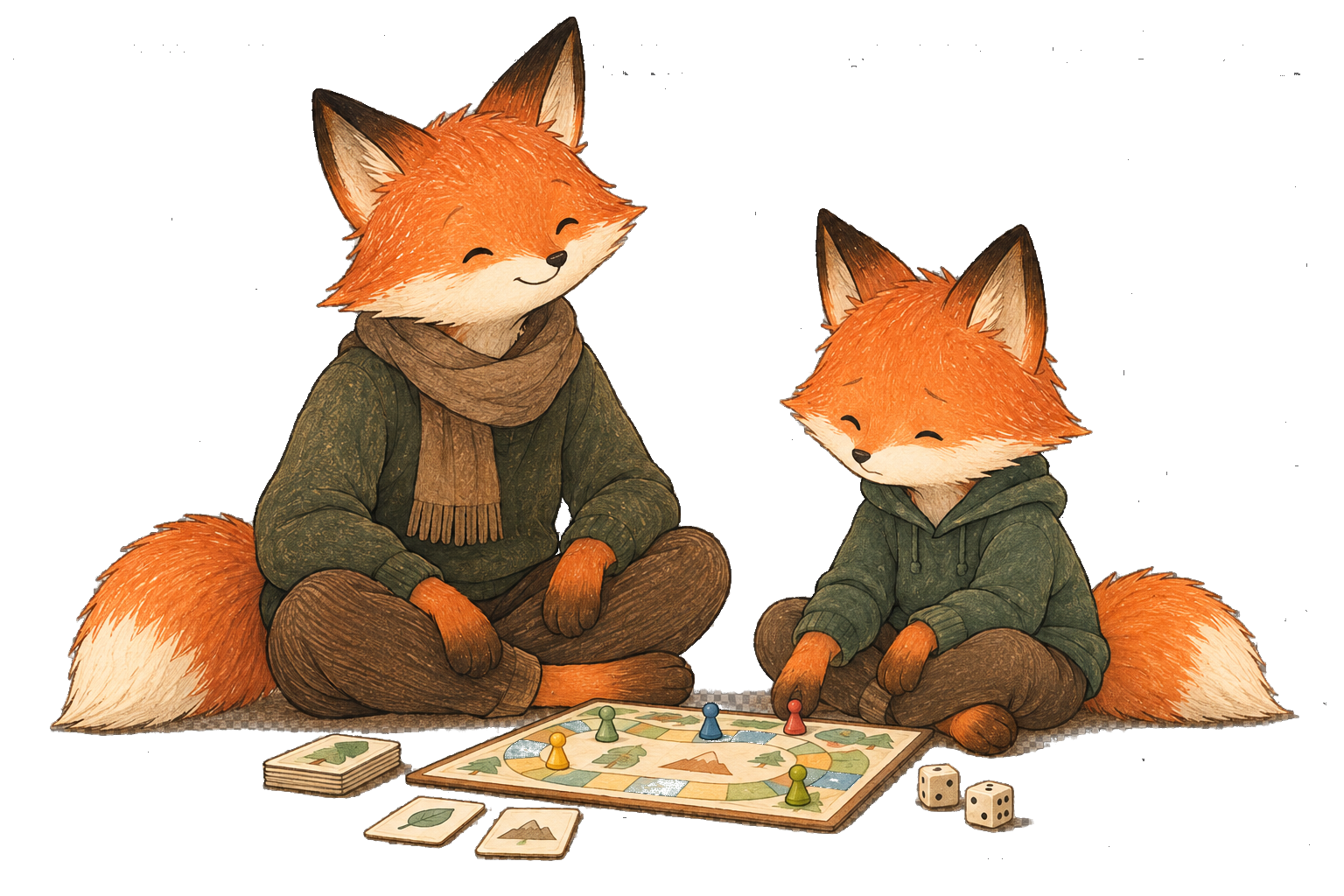
The last move changes everything.
A few minutes ago, everyone was laughing. Now the game is over, your child has lost, and the pieces are scattered across the table. “It’s not fair.” “I’m never playing again.” You were hoping for an easy afternoon. Instead, you are deciding whether to explain the rules, offer another round or put the game away.
Before choosing a lesson, notice what needs attention now. Is anyone being hurt? Does your child want company or a little distance? You do not have to settle every question while everyone is upset.
You do not have to guess the whole story.
Your child may have wanted to win, worked hard on a strategy or expected this game to go differently. They may also be tired or simply disappointed. These are possibilities, not an explanation you need to choose for them.
Start with what you can see: “You really wanted that last turn to work.” That leaves room for your child to correct you. It also avoids turning one difficult ending into a description of their character.
Disappointment is allowed. Hurting is not.
You can acknowledge the feeling without changing the result: “You wanted to win. I won this round, and I can see you’re disappointed.” If pieces are being thrown, move them out of reach and say, “I won’t let the pieces hit anyone. We can pause.”
You do not need to demand a smile, a handshake or an immediate rematch. There will be time to talk about how players treat one another. Right now, keep everyone safe and let the game stop.
Let the next attempt be a real choice.
Later, ask whether they want to talk about the game. You might compare the part they enjoyed with the part that was hard. If they want to play again, agree on a way to ask for a break before starting.
An easier game, a shorter round or a cooperative activity can be another option. It does not have to replace competitive games forever. Nor does every difficult game need to become a project. Sometimes the next useful moment is putting the pieces away together.
A few words to begin with.
“You wanted a different ending. We can take a break.”
“I won’t let you throw pieces at people. I’m moving them here.”
“How will we tell each other we need a pause?”
Leave room for their answer.
“Would you like company, or a little space?”
“Was there a part of the game you still enjoyed?”
“Do you want another round, a different game, or to finish?”
There is room for a different response.
There is no required timetable for enjoying competition. Avoid making a child’s willingness to play again the test of whether the conversation worked. A pause can be a reasonable ending.
Feel Capable
Another everyday moment.
When “nothing” may need a little more room
Making room for a quiet answer, without turning everyday conversation into an interview.
Read the Story →
Finding your way back after a sharp moment
A small, honest repair after you have spoken more sharply than you intended.
Read the Story →