
“I can do it myself” when you are running late
Balancing a child’s wish to try with the very real need to get out of the door.
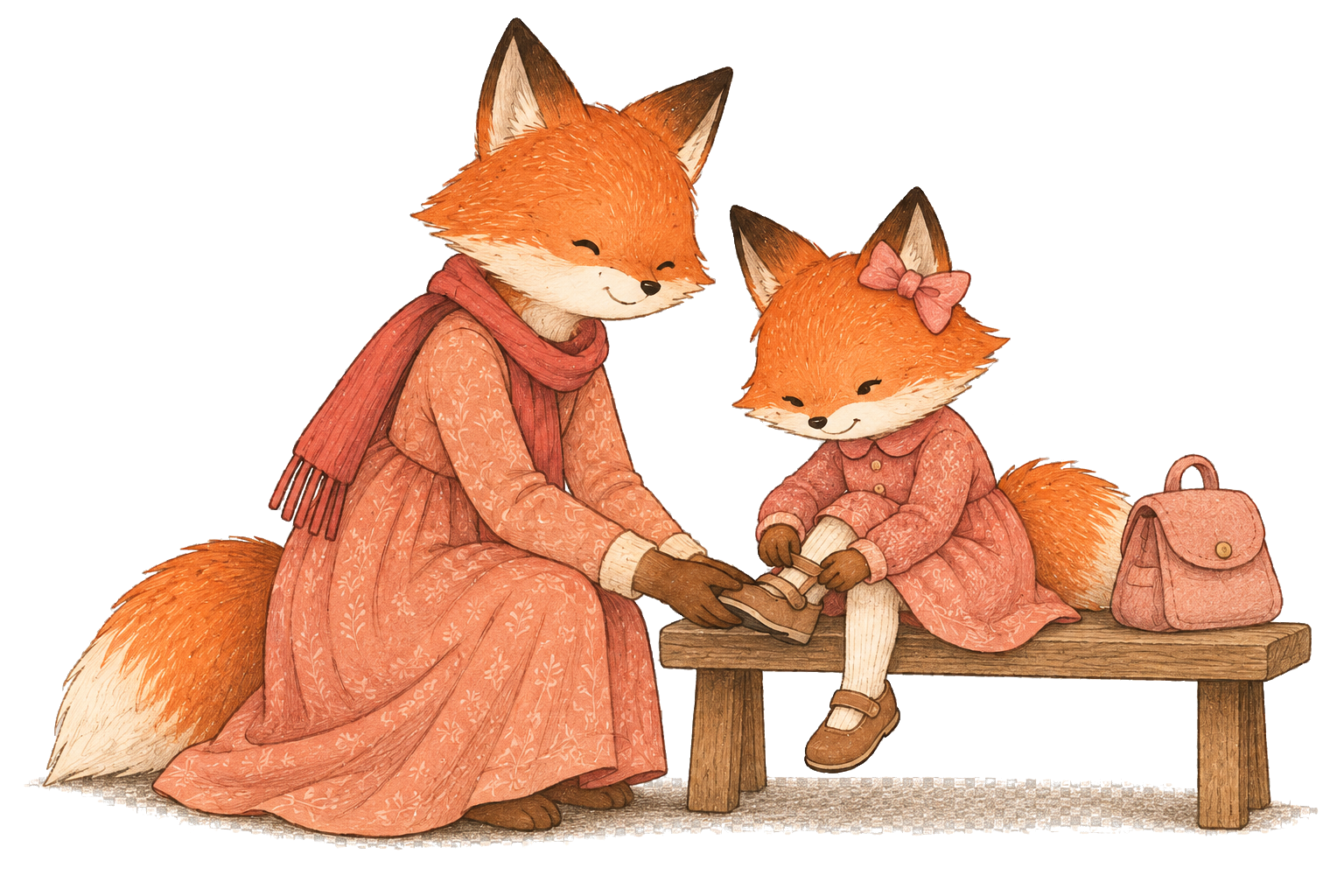
One shoe is on. The other has become a whole morning.
Your child is pulling at a fastening. You reach to help. “No! I can do it myself.” You look at the time and feel the pressure rising. You want to encourage the attempt, but you also have somewhere to be.
This is not a choice between unlimited patience and taking over everything. You can acknowledge the wish to try, name the time limit and look for a smaller part your child can still own.
What part is working already?
Look before reaching in. Has your child found the right shoe? Opened the fastening? Got their toes inside? A specific observation keeps the conversation close to the task: “Your foot is in. The heel is still folded.”
Avoid turning the attempt into a test of being a “big kid.” Help can be useful without making the child less capable. Equally, if a few more seconds are genuinely available, you can offer them without hovering over every movement.
Share the job without disguising the deadline.
Try: “We need to leave now. Would you like me to hold the shoe while you push, or help with the heel?” Offer only options you can actually honour. “Do you want help?” is frustrating if you already know that no is not an available answer.
If you must finish the task, say so plainly and gently: “I’m going to help with this shoe so we can go. You can do the strap.” Your child may still be upset. A clear explanation does not guarantee an easy response, and it does not need to.
Practise when the clock is not part of the task.
Later, invite another try without making it homework: “Would you like to try that shoe again before we put it away?” Let your child decide whether that is the moment. You might also leave a little more time tomorrow or choose a simpler fastening when you have that option.
If you rushed or mocked the struggle, acknowledge it: “I was worried about being late. I shouldn’t have made you feel bad for trying.” Independence can include choosing help, sharing a task and trying on another day. Finishing alone is not the only worthwhile outcome.
A few words to begin with.
“You opened the strap and got your toes in.”
“Would you like me to hold this part?”
“We need to go. I’ll help with the heel, and you can close the strap.”
Leave room for their answer.
“Which part do you want to do?”
“Would you like a hint, some help, or another try?”
“Is there a way we could make this easier tomorrow?”
There is room for a different response.
Children have different abilities, access needs and preferences. Independence should not mean withholding useful assistance. Adapt the task and the expectation to the child in front of you.
Feel Capable
Another everyday moment.

When losing feels bigger than the game
Staying close through disappointment, without changing the result or rushing the next attempt.
Read the Story →
When “nothing” may need a little more room
Making room for a quiet answer, without turning everyday conversation into an interview.
Read the Story →