
When the cardboard box already has a plan
Joining a child’s imaginary world without immediately directing where the play should go.
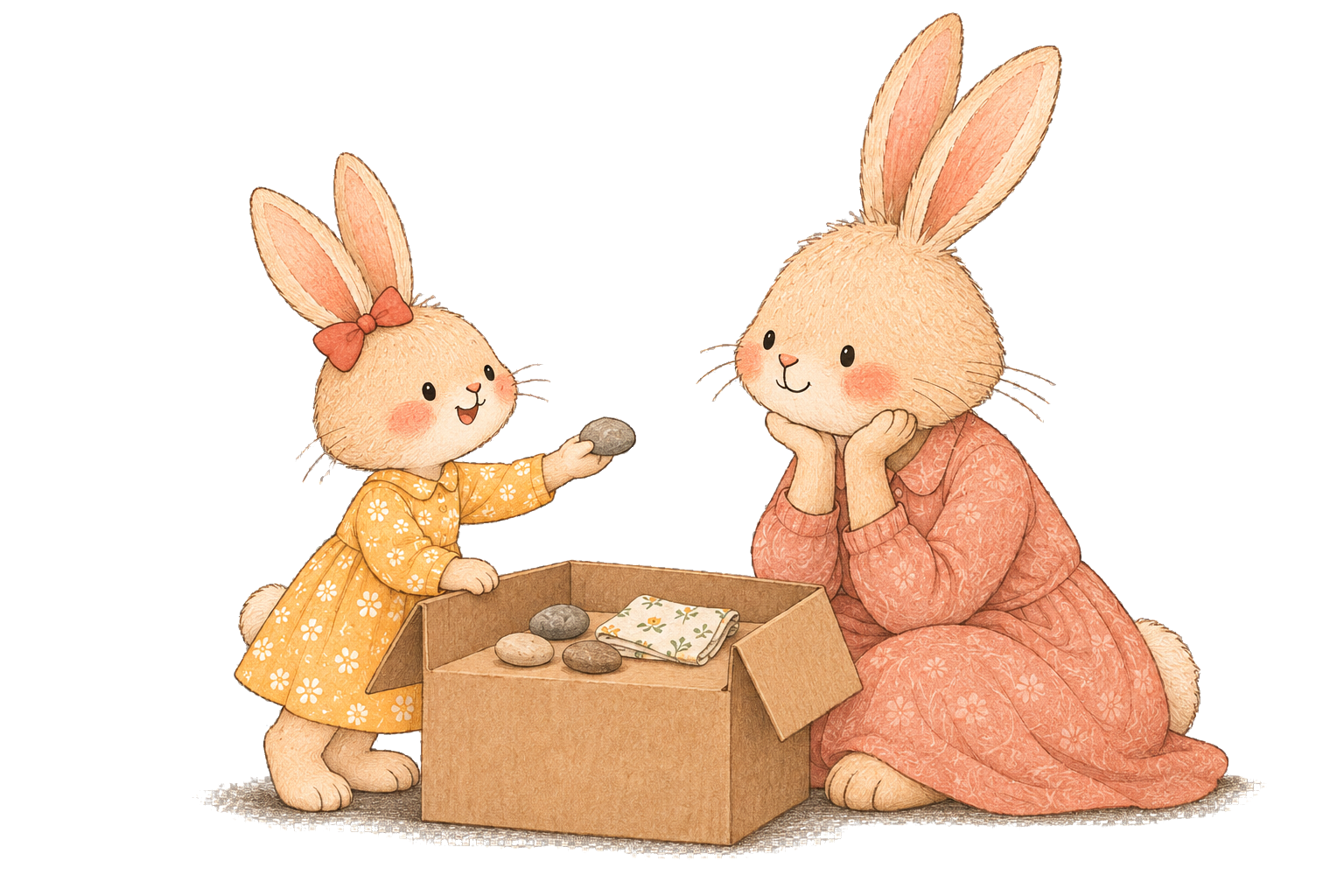
You see a box. Your child sees something else.
A cardboard box is in the middle of the room. You suggest a spaceship and start describing the windows. “No, it’s a shop!” your child says. You were trying to join in, but somehow you have become the person changing the game.
There is nothing wrong with having ideas. The question is whether this moment needs your idea, or whether there is room to find out what your child has already imagined.
Ask for a place in the game.
You might say, “Tell me about your shop,” or “Is there a job for me?” Then follow the answer for a while. Perhaps you are a customer who can buy only stones. Perhaps the shop is closed and your job is to wait.
You do not need to make every detail more realistic, add a learning question or improve the construction. If the box changes from a shop to a boat halfway through, you can notice the change without asking for a consistent explanation.
Following their lead does not mean agreeing to everything.
You can join the pretend world while staying clear about real limits: “The boat can sail here, but we can’t climb on the bookshelf.” If you do not want to be hit with the pretend sword, say so: “I’ll play, but I don’t want to be hit. Can the sword point at the cushion instead?”
You can also be honest about your time. “I can be a customer for ten minutes, then I need to make dinner.” A short period of willing participation is an option; constant availability is not required.
Make space for more than one player.
If another child joins, being the original inventor does not settle every decision. Help them hear each other: “You want a shop and you want a boat. Is there a way to play both, or shall we take turns?” Do not require agreement when separate games would work better.
At the end, ask whether there is anything they want to keep before tidying, if keeping it is possible. You can appreciate the time together without judging how impressive the finished object looks. Sometimes the box was only the starting point for a conversation you could not have planned.
A few words to begin with.
“What is happening here? Is there a part I can play?”
“I have an idea. Would you like to hear it?”
“I have time for one more customer, then I need to stop.”
Leave room for their answer.
“How does your shop work?”
“What happens next?”
“Which part would you like to keep for later?”
There is room for a different response.
Pretend play is one way to spend time together, not a requirement for every child or adult. Building, sorting, drawing or quietly sharing an activity can be just as welcome. Let the child’s interests guide the invitation.
Be Heard
Another everyday moment.
When losing feels bigger than the game
Staying close through disappointment, without changing the result or rushing the next attempt.
Read the Story →
When “nothing” may need a little more room
Making room for a quiet answer, without turning everyday conversation into an interview.
Read the Story →